Americans Don't Want a Fascist Economy
Pushback on prison camps and data centers is growing
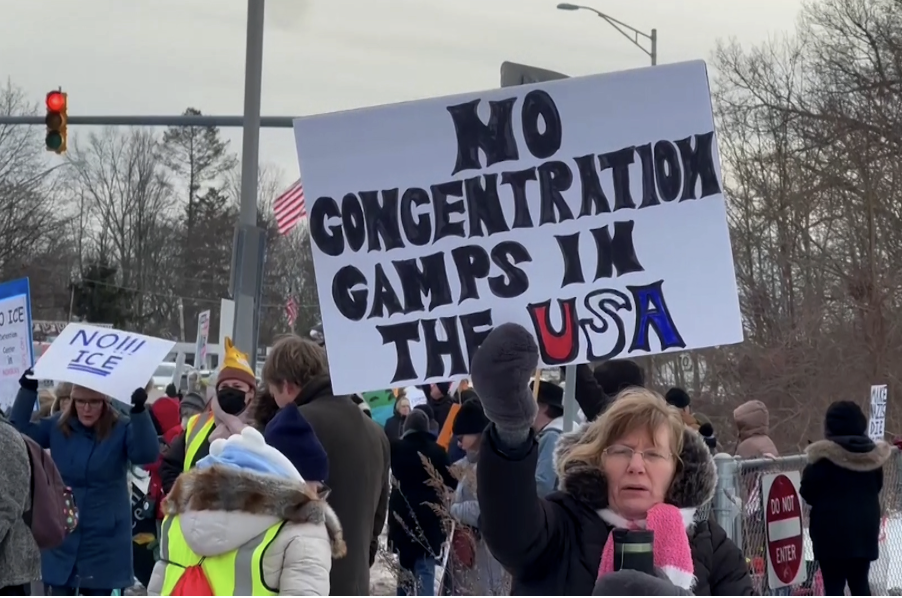
It turns out a lot of Americans aren’t keen on having giant data centers or prison camps in their communities.
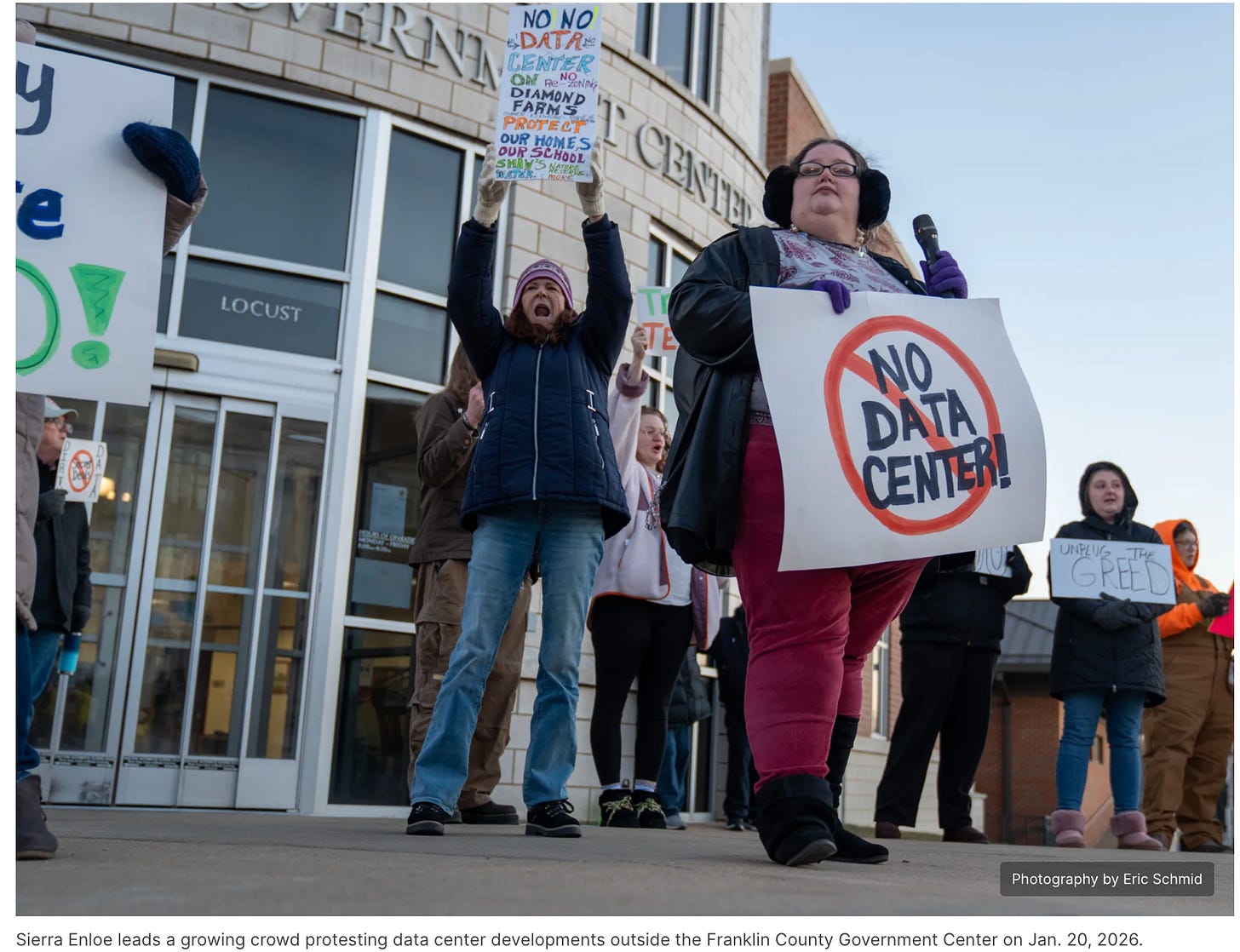
Across the country, protests are growing against the use of land and facilities by the feds for incarcerating humans or by Big Tech for nurturing AI. In Surprise, Arizona: Hundreds overspilled a city council meeting to protest plans to turn a local warehouse into an ICE “detention center.” Ashland, Virginia: A facility was pulled from sale to DHS after area residents objected to its purchase for use by ICE. Franklin County, Missouri: Hundreds packed a planning and zoning meeting to voice opposition to proposed data centers. Port Washington, Wisconsin: The mayor faces a recall petition as construction begins on a data center that is part of the Stargate AI project. Other examples abound.
A “Fascist Economics”
While some Trump voters may have expected a smart business approach to the economy, they are getting a fascist one instead. In 1935, German economist Wilhelm Röpke outlined the characteristics of “Fascist Economics” in an essay of that name, describing perfectly Trump 2.0’s erratic policy. A fascist economy has no set plan or strategy but is “wavering and hand-to-mouth.” Trump’s tariff chaos, with its wild and impetuous swings and reversals, fits the bill.
Fascism’s economics mirrors its politics with its “muddled set of rationalised sentiments and of sentimentalised conception,” Röpke explained. Both rely on a rejection of reason, coherence, and care in favor of aggressive ignorance and lurching emotion. It’s a contrast ridiculously highlighted when a prim, buttoned-up Scott Bessent pretends on the Sunday shows that Trump’s latest explosion makes sense.
Röpke further described a “relentless militarisation of the whole national economy” via a nationalist, interventionist system in which concentration camps and political prisons become features of economic infrastructure.
Cutting or holding hostage the kinds of government spending that drive economic growth — such as education and transportation infrastructure — the second Trump Administration is plowing money into the military and an increasingly lawless paramilitary. ICE now has $85 billion to spend — fourteen times what it was allocated a decade ago. ICE, which fits what Ropke called a “job-providing system for the Fascist partisans,” is on a manic hiring spree, providing lucrative jobs for mercenaries. And it’s on a real estate bender, buying up properties for human storage.
“NO CONCENTRATION CAMPS IN THE USA”
From east to west, north to south, blue state to red, Americans are organizing against ICE’s plans to turn warehouses into opaque, unaccountable prisons capable of incarcerating more than 80,000 human beings at once. Protestors are concerned for the safety of their local communities — especially in light of the violence against people and property that ICE has perpetrated in cities including Los Angeles, Chicago, and Minneapolis.
But many fear for the soul and future of the nation as the Trump Administration marches toward what Röpke called the “inhuman militarism of the whole of society” that a fascist economy brings.
The Trump Administration must hope municipal governments will become dependent on income from ICE and some local officials are making economic arguments for welcoming it — despite most of the money going to for-profit prison operators. But the public doesn’t seem to be buying it. Across the political spectrum, they understand this isn’t about economic opportunity. The dwindling support for ICE is political; the 3 in 10 Americans still approving of it — as most have grown disgusted — are overwhelmingly Republican.
One Republican member of the U.S. Senate, Roger Wicker of Mississippi, who opposed DHS plans for an ICE facility in his state, has come out against detention centers as bad business. In a letter to DHS head Kristi Noem, he wrote, “converting this industrial asset into an ICE detention center forecloses economic growth opportunities and replaces them with a use that does not generate comparable economic returns or community benefits.” Wicker now says the plans have been dropped.
Critically, a growing number of protestors are focused on the immorality of an economy based on cruelty, taking a lead that timid politicians need to follow. They are calling up and calling out the owners of properties for sale, developers, brokers, and local officials for participating in the creation of an inhumane system of camps for a lawless regime. An Arizona man gave a striking speech directed at local leaders who are pretending powerlessness:
Data Centers: Part of the Fascist Economy
The outsized power of the tech industry and its cozy relationship with the Trump Administration qualify its massive data center project as a key piece of a fascist economy. The industry is working overtime to secure investment and protection from regulation by the nationalistic regime by fear-mongering about the need to beat China on AI as a national security and economic imperative.
But the economic argument for the giant data centers needed to fuel AI mania is faltering. A study by Data Center Watch counted $64 billion of data center projects delayed or blocked between May 2024 and March 2025. Local concerns are driving bipartisan opposition: “From noise and water usage to power demands and property values, server farms have become a new target in the broader backlash against large-scale development.”
A key aspect of a fascist economy, economist Röpke wrote, is that corporate losses are socialized. Too many weary, wary communities have seen it all before — developers and corporations making inflated claims about jobs but leaving residents to deal with polluted land, water, or air, increased traffic and strained infrastructure, and higher costs for utilities and services. They’re done paying for the varied costs of what they recognize as corporate welfare.
Some public opposition to data centers goes beyond NIMBYism to focus on broader concerns about their known and potential effects on the environment, mental and physical health, and the economy, including AI’s ability to put people out of work. And some is based on an understanding of the AI pushers' ties to Trump.
Then there’s what The Consumer Federation of America’s Ben Winters calls a pattern of “quid bro quo” where in return for donations, settlements, and other payments from the billionaire tech bros and their companies, the Trump Administration is:
Fighting commonsense regulation at the state and federal levels, defanging the cops on the consumer protection beat, maximizing commercial surveillance, rushing out to give precious public land to Big Tech for dirty data center development, handing out billions in federal contracts, publishing and promoting the tech industry’s dream “AI Action Plan,” and picking fights with other countries over digital taxes on massive private companies...
So key industry leaders have proven to be eager economic partners to fascism. Elon Musk and Mark Zuckerberg have been willing to censor dissent and activism and facilitate the spread of hate and disinformation on their platforms and in the case of Musk, via its Grok AI chatbot. Peter Thiel’s Palantir is profiting from providing data and surveillance capabilities to a regime that has shown it does not believe in Americans’ right to privacy, assembly, protest, and protections from search and seizure. In this context, AI’s future potential for greater surveillance and more effective propaganda is a meaningful threat. Using AI technologies and assisting their growth by approving data centers further empowers tech billionaires who have revealed themselves as anti-democratic.
Americans are increasingly resistant to the narratives the Trump Administration is providing to put in place a fascist economy that furthers its political aims while degrading the lives and livelihoods of the people. A fascist economy is the “road to privation” of all kinds. It’s past time for politicians to stop seeing economic issues as separate from the greatest moral issues of our time and see that they can take up both at once. It’s the fascism, Stupid.