Vampire, Zombie, Scammer, Ghost
Our obsession with frauds like Musk, Cohn, Holmes — and Trump
The post includes some spoilers.
It’s been quite the spooky season. I’ve watched a film about a chain saw-wielding vampire and one with a blood-sampling zombie and read a truly nasty ghost story.
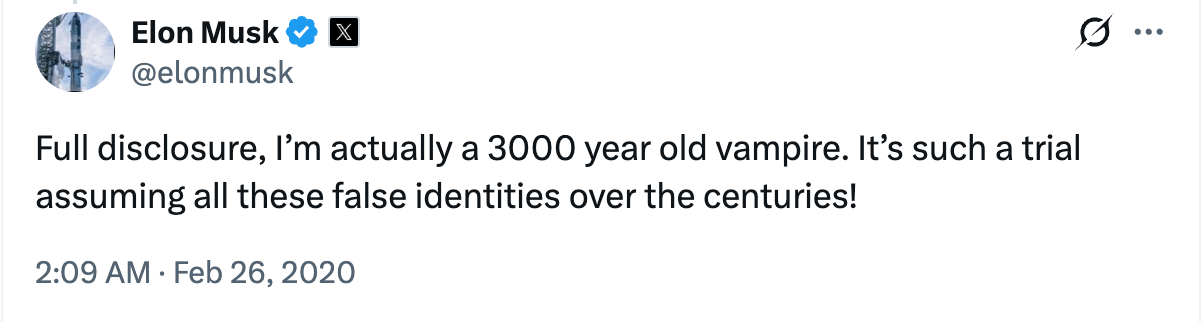
A few weeks ago, descending a staircase at a Manhattan theater, I was surprised by two large, severe men in suits. One ran a wand up and down my body while the other searched my bag before waving me into a small, dark theater. Security at this showing of the “Musk” documentary was tight because afterward, its director Alex Gibney and Musk ex Ashley St. Clair engaged in a Q&A. When the pair took the stage, three more security guards joined them. The film — and seeing it under these conditions — lent new layers to my understanding of Elon Musk, self-described vampire.
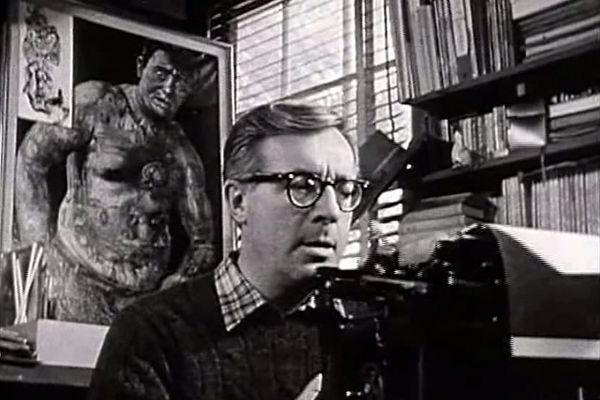
That day I had started Kai Bird and Susan Goldmark’s “American Scoundrel: Roy Cohn’s Dark Journey from Joe McCarthy to Donald Trump.” The ghost of corrupt American politics past, Cohn, the book makes richly clear, tutored Donald J. Trump when he was an ambitious, young socialite in ways that allow the disgraced lawyer to haunt us.
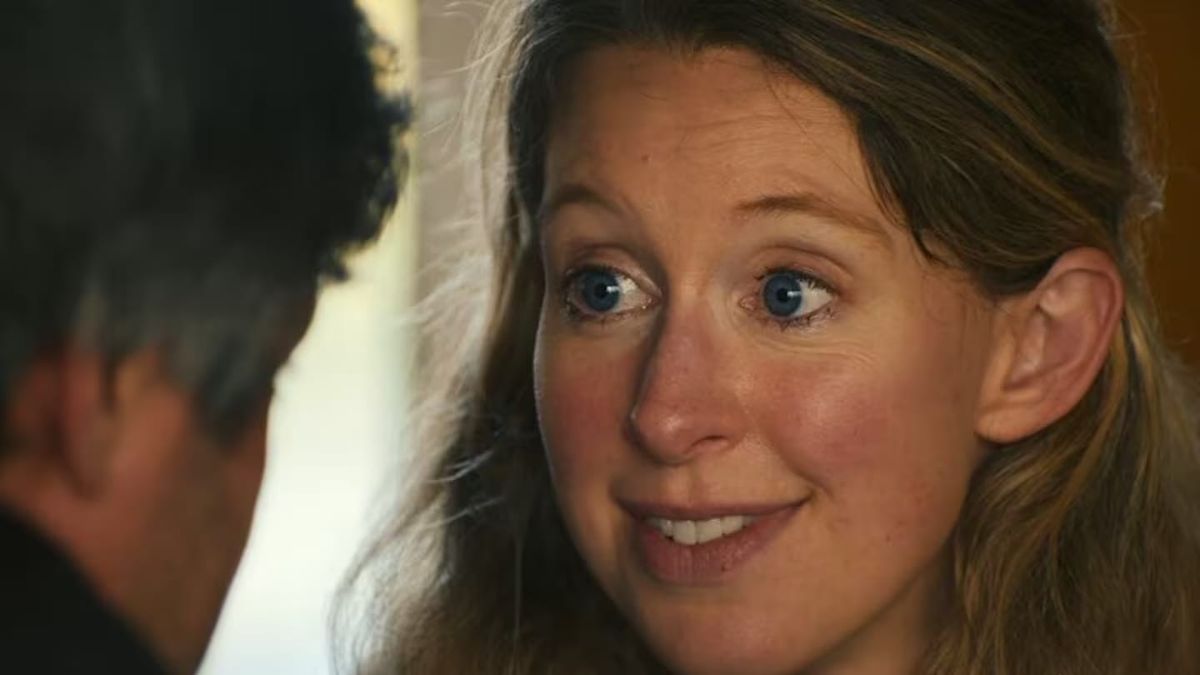
Then I went to “You Can See Everything,” Nathan Fielder’s way up close and personal film documenting the time he spent with Elizabeth Holmes of Theranos infamy in the weeks prior to her incarceration for criminal fraud. If you’ve seen the trailer, you’ve seen the wide-eyed stare that is one of many unsettling behaviors of the movie’s zombie-like “Liz.”
I’m not alone in my interest in scams and scammers and how far they will go to perpetuate the scams they made and that made them. I wrote about some of the reasons for this interest while watching the Murdaugh trial and when I went cold turkey on “Dateline.” A must-read is Jia Tolentino’s “The Story of a Generation in Seven Scams,” in which she unpacks examples of the inescapable fraudulence of American culture, politics, and economics.
A fascination with scamming is not uniquely American: The trickster figure has appeared across time periods and cultures. But stories of scammers, especially outsized ones, hit a sweet spot at the intersection of two fundamental flaws of the culture: a drive to hyper-individualism and demand to be entertained.
Alex Gibney begins his documentary on Elon Musk by asking how the man accumulated his obscene power, and importantly, he asks why as a society, we gave this to him. One answer that both “Musk” and “Everything” provide is the hyper-individualism that lends itself to hero worship.
To build his cult-like following, Elon Musk sold the story that as a single brilliant individual, he would do what the US auto industry, faceless collection of corporations, could not: deliver us an exciting, new automotive future in the form of a sleek, manly electric car. Cars were the perfect vehicle (pun unavoidable) for his scam — they’ve been sold for over a century as the physical manifestation of individual power, progress, and freedom. Many swallowed Musk’s grandiosity that he could single-handedly protect the environment and our world. The pose has been, as his associate Trump put it, “I alone can fix it.”
The scam genre becomes problematic when what should be exposé taps into this same value. Rather than identify with the victims of the scam, audience members can ride shotgun with the perpetrator. Stephen King has said that by consuming horror, we seek to feed the animal inside us. Scam stories may allow us to momentarily enjoy the thrill of psychopathy: What can I get away with?
Gibney’s “Musk” doesn’t fall into this trap. In the film Musk remains remote, opaque, repellent, while his victims, including his ex-wife and ex-business partners seem close, transparent, compelling. The palpable sadness of Justine Musk, his ex-wife and mother of six of his children, eliminates early the risk of feeling any frisson from Musk’s exploits. Because Musk refused to be interviewed, his words are delivered by an AI replicant, making the movie less about the man as monster than about the danger of his monstrous power — and how it grew to the point where his say in the U.S. government, military, foreign policy, and elections threatens our democracy and the international order.
Musk is not a vampire, though he has blood on his hands. His hundreds of thousands of victims are not asides: business and government workers harassed and fired, drivers and pedestrians injured and killed, ex-recipients of aid sickened and left to die. The manner in which Gibney reveals the expanding scope and scale of the danger the man presents to humanity elevates the film beyond entertainment. There is no catharsis, no leaving the theater comforted — especially if security guards are still in the lobby as a form of witness protection.
“You Can See Everything” also guards against audience identification with the scammer at its center. Nathan Fielder’s uncanny, comic presence and disarming mode of questioning moves the audience to his place: I wanted the truth he presses for. When he agrees to move in with Holmes, her husband, and two children so that he can have more time with her, I was ready to pack a bag.
Some argue the appeal of true crime and of horror is that by arousing our fears, they can assuage them. This works for some scam stories, through which we can comfort ourselves that of course we wouldn’t be scammed by that kind of person or that by learning how a particular scam works, we’ve armed ourselves against it.
Nope. Not here. The audience begins to realize Fielder may have worked his way into a trap. Holmes — and her husband, who becomes increasingly menacing — play with language and logic, distract, deflect, and delay. Elizabeth Holmes, the slick, hard-driving head of Theranos, convicted felon, is gone but undead, living on as the wide-eyed zombie that is “Liz,” dreamy, breast-feeding, baby-rocking mother. It emerges that she and husband are already at work on Theranos 2.0. Prison be damned: only she can do it, save the world, one blood sample at a time.
Once again, the audience is not comforted as the credits roll. There will be more scams, some the very same scam from the very same scammers. They are compulsive, and we are still not immune.
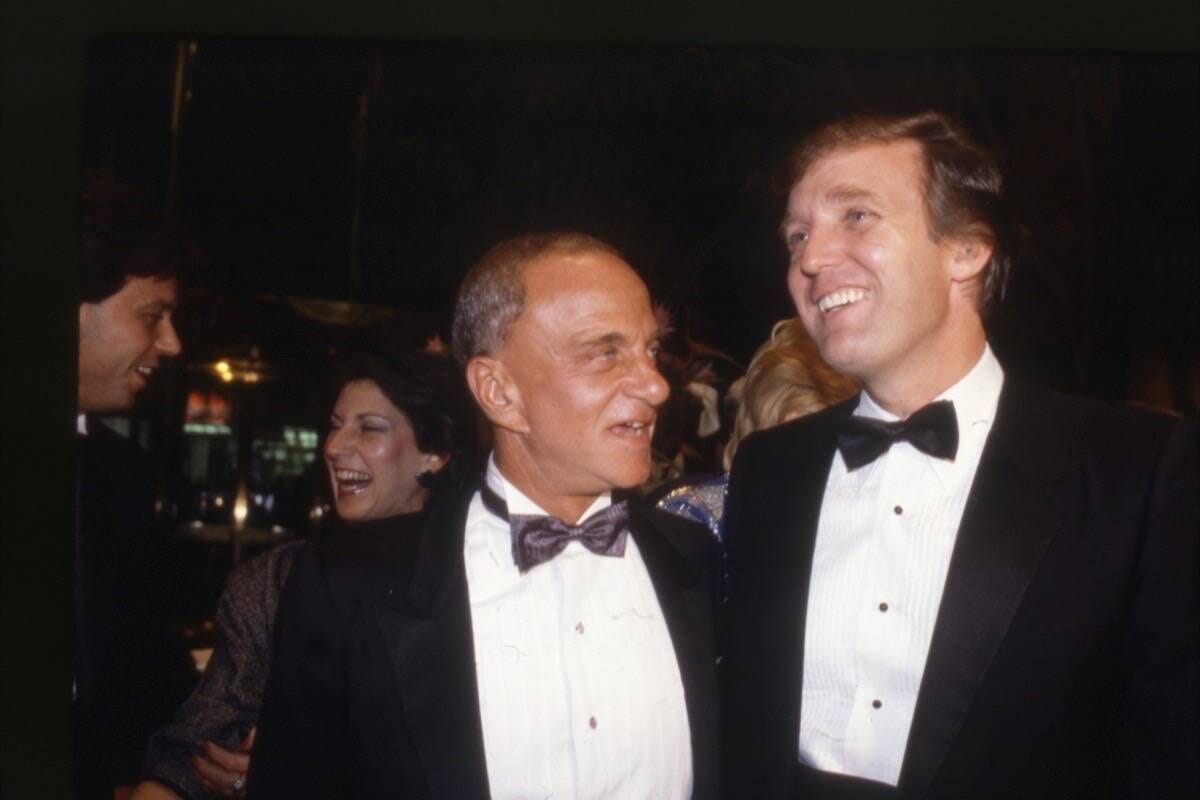
Like Elon Musk, Roy Cohn grew in power by political fear-mongering alongside Sen. Joe McCarthy. While Musk expanded his following and connection to America’s far right by spreading lies and fears about immigrants, Cohn’s target were Communists, real and imagined. “American Scoundrel” reveals a man who treated laws and rules with disdain and perceived enemies with vicious contempt.
His “personal immorality planted the seeds of America’s descent into the political folly of the 21st century,” the authors state. Cohn showed a young Trump how not to pay bills, how to wreak vengeance, how to sue and countersue, how to defang and defame, how to claim victory in defeat. He taught him the art of the deal was in performance.
Scammers are performers, and Americans like to watch. Trump’s performance in the role of Successful Businessman and Brash Outsider gained him a political following; his White House is a set; his cabinet is cast with models and actors; his rallies are stand-up routines. He only loses when his schtick fails to provide sufficient escapism.
To get something meaningful from scam stories, the key is to not get distracted by the individual since that is how scammers thrive. While their guises and disguises captivate, they keep picking pockets. “American Scoundrel” is not as entertaining a book as either “Musk” or “Everything” are documentaries, but that is not its weakness. If it has one, it is in its attempts to find reasons for Cohn’s pathological behaviors. The question of how psychopaths become psychopaths and narcissists narcissistic, hypocrites hypocritical is interesting, but steers away from the question that Alex Gibney raises: How do we enable them?
Key to answering this question, as Fielder demonstrates, is not getting pushed and pulled by the individual and their performance — but interrogating the society that nurtures them and helps them grow into monsters. It’s interesting to ask whether Roy Cohn’s icky mother raised him to act with impunity, but it’s vital to ask how the political and social system allowed him to live most of his life that way.
“Everything” reaches another level when Fielder brings in actress Amanda Seyfried, who played Elizabeth Holmes in the 2022 drama series, “The Dropout.” Injecting the actress into the unreal reality was a mind-bending reminder of my role as a receptive audience for the entertainment of scamming. (Of course I'd seen the series! I'd eaten it up!) Asking whether Seyfried and Fielder have fallen for Holmes’s newest act produces awe of Elizabeth’s performance as “Liz”: fear but also respect for “the bit.”
“Bit” is a trivializing word, but after all this I’m thinking that so is “scam.” Fraud is better. These are not vampires, zombies, or ghosts of the imagination: This makes them larger than life. They are small people, real-life frauds who steal money, kill human beings, and ruin lives — and through their privilege, connections, stolen wealth, do so over and over again while we watch them instead of their destruction. Are we not entertained?