Yes, There is a Teacher Shortage
And it is affecting the quality of education American kids are getting
Unless you seek out education news, it’s probably been a while since you’ve heard about the teacher shortage.
Early in the pandemic the mainstream media ran a spate of stories about more teachers retiring early (points at self) or changing careers, exacerbating a crisis long in the making. Cameth then the contrarian backlash, exemplified by Derek Thompson’s 2022 Atlantic piece, “There is No National Teacher Shortage.” The discussion was dampened, and the issue now mostly gets covered by local outlets.
 Anne Lutz Fernandez
Denial of a shortage has been facilitated by several factors, recent analysis by Melissa Bamberger and Benjamin Creed shows. The most important has been a lack of accurate national data — so it’s great news that journalist Matt Barnum has compiled new data on teacher turnover. Last week, he shared his findings in a virtual discussion and in writing (and helpful charts).
A shortage that’s real and really bad
The shortage is of course a matter of movement into and out of the field. There aren’t enough teachers on the way in: the pipeline is bad as interest in the career has plummeted, with the percent of college grads entering the profession lower than it’s been in a half century.
Then there are too many on the way out, as Barnum’s rigorous compilation and analysis of data from 21 states shows:
Most of those states have experienced four to five straight years of elevated teacher turnover, compounding the losses year after year. High-poverty schools in particular were already having a hard time keeping teachers.
Even though turnover finally appears to be trending down, the consequences persist.
Barnum uses as an example Texas, where if turnover had stayed at pre-pandemic rates, the state wouldn’t have lost 35,000 teachers, one out of ten of its total today. The problem is cumulative and widespread. 90% of the states for which he had data saw a “significant” increase in departures from 2019 to 2025.
A multiplicity of causes
The virtual event with Brown U’s Matthew Kraft and California teacher Meghann Seril included a helpful conversation about the many causes of this turnover.
The list was already long in the mid-teens when I began researching and writing about education. In surveys and interviews, teachers across the country shared their rising stress from the failings of federal testing and “accountability” regimes, the villainizing of educators by political leaders and much media, greater micromanagement of curriculum and instruction, the effects of widespread poverty, and chronic underfunding.
What been layered on since? An explosion of attention-hogging and -shortening tech, a youth mental health crisis, rising behavioral issues, increased school shootings and hoaxes, an epidemic of AI cheating, rampant grade inflation, escalating political and state violence and censorship, and a deadly pandemic.
It should be no surprise that turnover is higher, that many new teachers don’t last long, and that veterans are taking their experience out the door prematurely.
 Anne Lutz Fernandez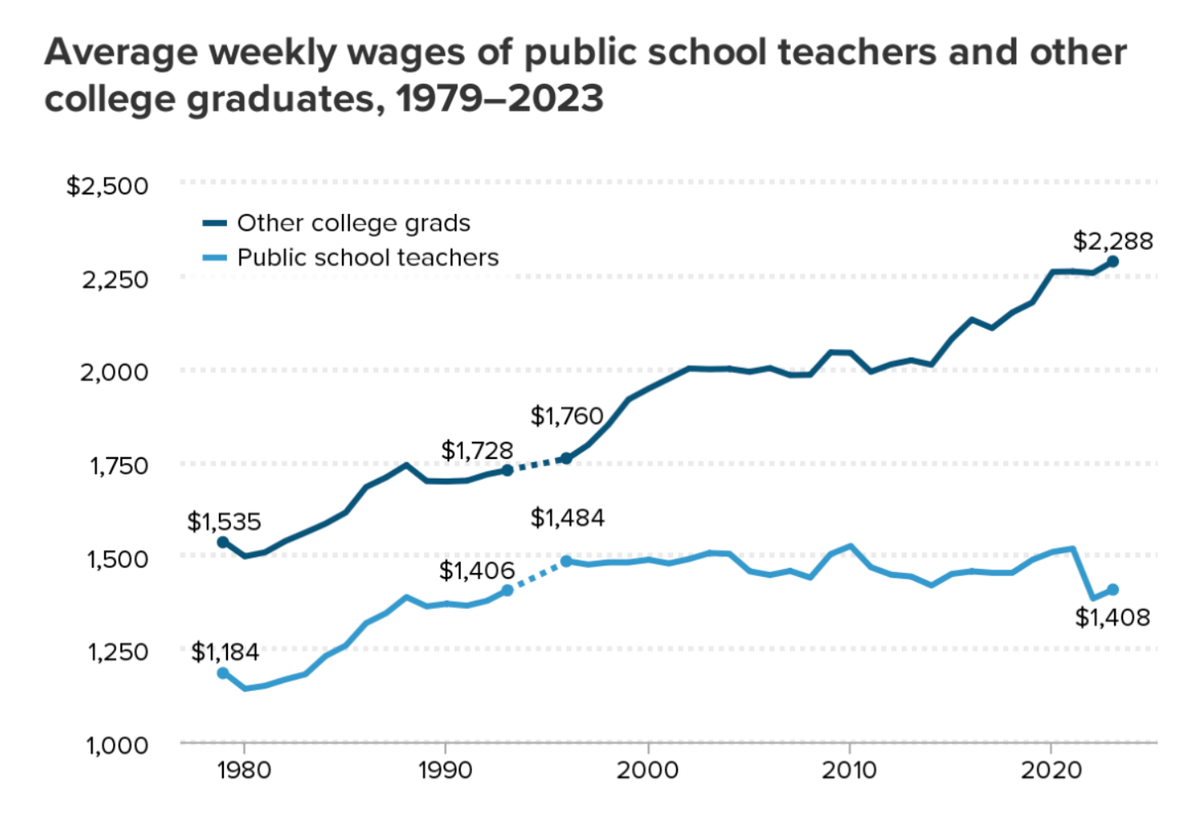
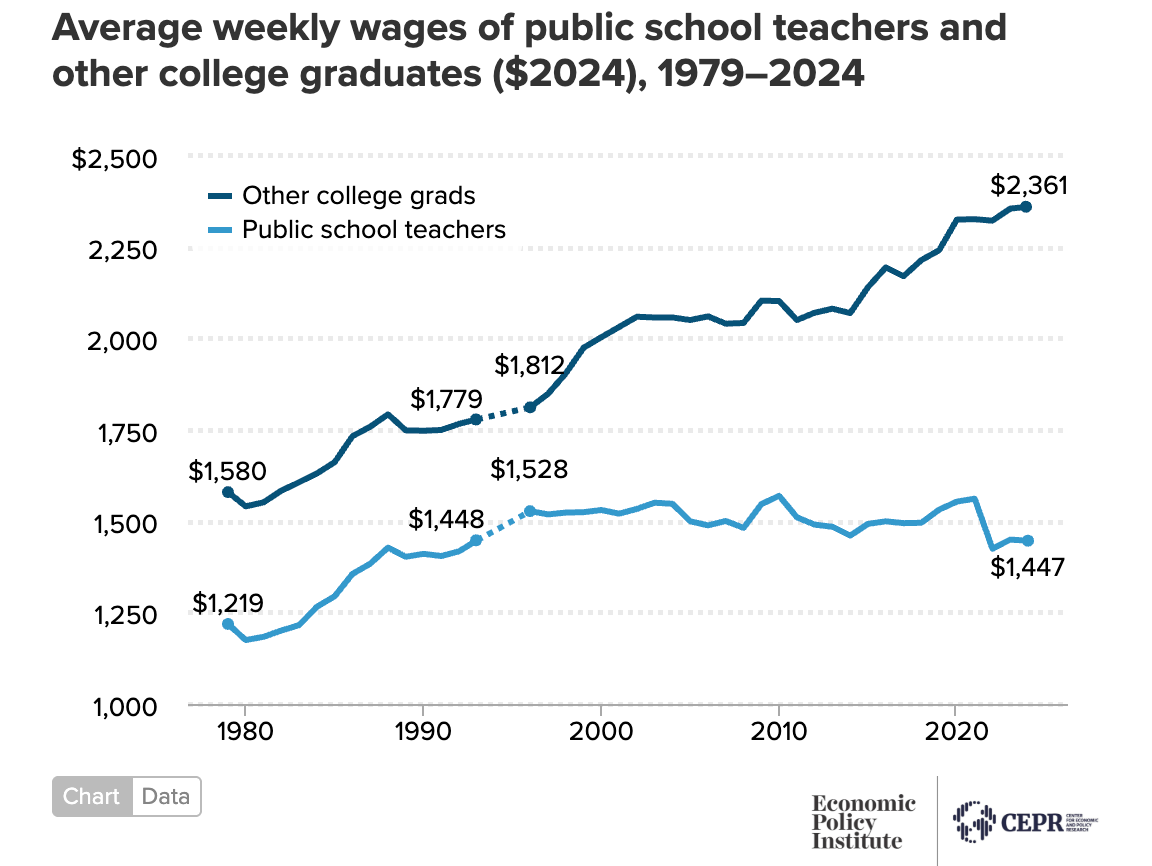
Teaching is attracting fewer candidates because students and career-changers see a field that, as the Chalkbeat panelists noted, pays much less than others requiring similar education levels, provides limited recognition for success, and allows less flexibility as more employers offer work from home options.
Cascading effects
So we have a teacher shortage. It is a persistent crisis with feedback loops and cascading effects that are destabilizing to the profession and to schools.
Turnover is costly: Learning Policy Institute estimates districts spend an average of $12-25K to replace a single teacher. This quickly adds up and leaves less money for pay raises or stipends.
The unfilled spots that result from turnover and the inability to recruit qualified candidates makes the job harder for teachers who stay. Remaining teachers lose valued and experienced partners, are asked to train replacements, and must provide remediation for students who’ve been taught by a series of substitutes or novice teachers. These teachers aren’t just working harder, they are more stressed, have less time for their students, and can become less effective. It causes some to look toward the exit themselves. Making the job harder, of course, makes it more difficult to recruit.
Turnover harms students, especially the most vulnerable. Barnum’s analysis showed exit rates were higher in high-poverty schools, which already have turnover above that of well-resourced ones. Turnover has a proven negative effect on student achievement and is highest in high-poverty schools, where achievement is already lower. It has a worse effect on the achievement of those with disabilities than those without. Turnover also harms children's social-emotional development. This feeds behavioral issues that disrupt learning and help push some out of the classroom.
 Anne Lutz Fernandez
At this moment politicians and pundits are more than happy to call the state of education a crisis based on standardized test scores and how they interpret them. As Barnum gently puts it, “the loss of teachers and instability in schools deserves to be on the list of plausible contributors” to both the long-term decline of scores and the slow recovery from their pandemic dip.
I’ll boldface it: We can’t improve student achievement without fixing the teacher shortage.
No silver bullets
I’ve written elsewhere about some of the bad ideas that have been tried to address the shortage and about some of the small but meaningful things administrators can do that cost little or nothing.
 Anne Lutz Fernandez
But as with other complex systemic problems, there is no silver bullet and little that will be effective without a host of moves to improve the profession by increasing pay, engendering respect, improving working conditions.
The good news is that some of the fundamental joys of teaching still hold — the students themselves and the light they throw off when they’re learning. But one is being quashed. I’ve heard from too many educators who find it harder now to feel they are making a difference in kids’ lives. Abiding the conditions that grind away this essential motivation is giving up on American education without saying so.